
Board Certified Diplomate Forensic Engineer
440-838-0640, 440-832-9540
www.maddenfe.com
Fixed Fee Preliminary Accident Evaluation Available
M adden A ccident A nalysis & F orensic E ngineering
Page Links for more information, click on subject listings below
Main & General Pages
 ? Equipment & Machinery
James D. Madden, P.E.
Related Basic Specialties
These Specialties are in a website which will open in a separate tab to the right of the current tab. This website in the current tab and the new website will be available side by side.
*
Forensic E ngineering & Scientific Accident Reconstruction over 30 Years Investigating, Analyzing, Reconstructing & Testifying about Accidents Contact us at ? 440-838-1191 or ? 440-832-9540 or ? [email protected] An Interdisciplinary Science, Combining Normal Psychology with Engineering, dealing with the interface and interaction of persons with their surroundings
Table of Contents - Human Factors Page - links to content on this page
click on the underlined squares to link to the subjects ? Our Work using Human Factors, and its involvement in Our Forensic Engineering Work ? Our Forensic Engineering Work - number of ? Cases ? Reports ? Affidavits ? Testimonies ? Human Factors Discussed ? Experience with Human Factors ? Our Typical Work Activities & Products ? Presentation of Results of Work ? Geographic Area available for Work ? Contact Us by Phone, Mail or Email ? Consult, before and after assignment ? Fee Schedule availability ? Curriculum Vitae and additional Qualifications ? Links to Other Pages (left sidebars)
Use the Search Box at the left to search the whole website. Use Control F, 'Ctrl' + 'F', to locate specific words on this page.
Our Work using Human Factors in Forensic Engineering Work
In the Forensic Engineering work in the Forensic Specialties, Human Factors is an integral, routine part of our reconstruction and engineering analysis of accidents and our engineering analysis of equipment and facilities involved in these accidents. Engineering Analysis using Human Factors, along with Safety Design principles, is a routine and integral part of our evaluation of the safety of consumer products, equipment, all types of facilities, industrial and commercial operations, and construction activities. We routinely use Human Factors in accident reconstruction and engineering analyses regarding the human involvement in accidents. Human Factors is often involved in our reconstruction of many accidents, such as Traffic Accidents, because a person's response to stimuli associated with a hazard is an aspect of Human Factors, and thus, in many cases, an aspect of determining how an accident occurred. Safety features, such as Safeguards and Warnings, and their need and use, are based on Human Factors and Safety Design principles . Human Factors is involved in our engineering analysis for the need for Safeguards and/or Warnings when one or the other is not present. Human Factors is also involved in our analysis of Safeguards and Warnings which are present, for their appropriateness and sufficiency. This involvement of Human Factors is a natural consequence of the derivation of the requirements for Safeguards and Warnings from the principles of Human Factors in conjunction with Safety Design principles and the Safety Design Hierarchy. Human Factors and Safety Design principles are part of the bases of the best Codes, Standards and Recommended Practices. We routinely use Codes, Standards and Recommended Practices in our engineering analysis, and the associated Human Factors principles included in these Codes and Standards.
<< click for a description of the typical activities and work performed << click for discussion of Human Factors
If lines of text overlap in this website check the browser zoom setting - reducing the zoom should prevent overlap of lines of text. If parts of the website are missing or distorted, such as a section of the Left Navigation Bar, or a button, try rebooting the page in the browser, one or more times - click on the circle arrow at the left of the website name [URL].
E xperience and Qualifications of James D. Madden, P.E . in regard to Human Factors
?
Combined, Engineering and Normal Psychology are the scientific bases of Human Factors , and the related studies of the human-machine interface, human-facility interface, and responses to hazards. James D. Madden, P.E. has specific education in Engineering and Normal Psychology, as follows:
?
as part of the Bachelors and Masters degrees in Engineering, and additional college work after receiving the degrees, he took extensive coursework in Engineering
? he minored in Normal Psychology, as part of the Bachelors degree work
? acquired personal knowledge of Human Factors in practice and the human-machine and human-facility interfaces while working in industrial facilities, for 1 1/2 years full-time and then at times over the following 15 1/2 years while in engineering design, which directly built on the education in the principles of Human Factors acquired in college coursework in Engineering and Normal Psychology ? during 17 years working in industrial operations and design engineering, used Human Factors as an integral part of engineering design, including specification of Safeguards and Warnings, which required the use of Human Factors.
? As a forensic engineer for over 30 years , routinely use Human Factors in engineering analysis of accidents, and equipment and facilities involved in accidents, including analyzing Safeguards and Warnings which are present, and analyzing for the need for Safeguards and/or Warnings, which requires the use of Human Factors ? earned 2 Engineering degrees , Bachelor of Science and Master of Engineering, and took additional credit coursework post-degree, taking coursework in physics, chemistry, mathematics, engineering mechanics, mechanical engineering, chemical engineering and normal psychology ? earned the Professional Engineers license (P.E.) by taking the National Council of Engineering Examiners' examination in Fundamentals of Engineering and the Mechanical Engineering and Chemical Engineering sections of the National Council of Engineering Examiners' (NCEE) examination in Principles and Practices of Engineering ? designated a Diplomate Forensic Engineer by the National Academy of Forensic Engineers in accordance with the standards of the Council of Engineering and Scientific Specialty Boards (CESB) ? at the start of forensic work, completed refresher and additional post-degree college credit coursework and continuing education coursework in mechanical engineering, metallurgy and materials
? attended engineering seminars presented by the National Academy of Forensic Engineers
? regularly attend additional technical courses and seminars each year to meet the requirements for continuing engineering education for the Professional Engineer's license
? over 40 years of engineering experience , with: ? 17 years experience in industrial operations, engineering design and construction assistance ? 30 years experience in forensic engineering , including: ? testifying in over 90 depositions and over 75 trials ? issuing over 600 reports and over 60 affidavits ? working on over 1000 cases See more about qualifications of James D. Madden, P.E. on the Qualifications Page . See details of the forensic work throughout this website, and a summary on the Employment Page . See details of the pre-forensic work on the Employment Page and the Engineering Design Page .
H uman Factors
back to 'Our Work...' to Table of Contents to top of page
Human Factors is an interdisciplinary science combining Normal Psychology with Engineering for the purpose of studying the interaction of persons with their surroundings, the human-mechanical interface, and the safety aspects of this interface. Normal Psychology is the study of 'typical', also known as 'normal' persons, and their interrelationship with their surroundings. This covers such subjects as perception, cognition, attention, response to hazards, and the practical functioning of the senses, such as eyesight and hearing. Human factors is an applied science, utilizing engineering in conjunction with normal psychology to design items and facilities used by persons so that the interaction between persons and the item or facility will be efficient and safe. Human Factors is also part of the engineering analysis of items and facilities to determine if the interaction between persons and these items and facilities will be safe. Such items can be of many physical types, such as industrial equipment, consumer products, components of equipment, etc. Human factors is an applied science which is particularly important in the design of industrial equipment and machinery and consumer products to be safe in use and in proximity to persons. Human Factors is also an important factor in the design of safety containment devices, such as containers for chemicals, so that they function to protect users as they use hazardous materials. Common equipment safety features are the result of the application of human factors, and the consequent safety practices, to hazards common to many machine and equipment types. Such features include safeguards (physical guards, light curtains, dual operating buttons, safety instrumentation, etc.) and warnings , as well as design features to design out hazards . Human Factors is important in the reconstruction of accidents because the subjects of human perception, cognition, attention, and the response to hazards, and the practical functioning of the senses, such as eyesight and hearing, are important aspects of determining how the accident happened, in particular how the human-mechanical interface was involved in the accident. An alternative common term for human factors is ergonomics, although some Human Factors specialists consider this term to be more restrictive than the term Human Factors. Human Factors is the basis for Safety Design . Human Factors and Safety Design are the bases for the use of Safeguards and Warnings . Safeguards and Warnings are required by Safety Design principles. Human Factors and Safety Design are an important part of the basis for many generally accepted Codes, Standards and Recommended Practices . These subject areas are all closely related.

O ur Typical Work Activities and Products, when warranted by the case Our work investigating, analyzing and reconstructing accidents, and presenting the results, may include any or all of the following, depending on the needs of the case: ? inspection of the accident site , such as a roadway, outdoor facilities, building or industrial facilities ? inspection of the involved equipment , in current condition, including in damaged condition (such as crashed vehicles); and when available for operation, during operation (such as industrial equipment) ? photography and/or video of the accident site and involved equipment ? interviewing witnesses (often during the inspection of the accident site, product and/or equipment) ? review and study of case documents, evidence and applicable codes, standards, regulations and recommended practices ? testing accident items and exemplar items (such as consumer products) ? drawings, calculations, graphical analyses, computer analyses , etc. as required to analyze and reconstruct the accident, and to present the engineering analysis and reconstruction ? written reports and affidavits , and exhibits ? coordinating or interfacing with others while they are preparing specialized exhibits such as video animations and videos of demonstrations ? testimony in deposition , trial and arbitration
P resentation of results of our work We present the results of our investigations, engineering analyses and reconstructions in the client's choice of any, or all, of the following: ? verbal reports, by telephone or in face-to-face conferences ? written reports and affidavits ? deposition testimony, including video deposition ? trial testimony and arbitration testimony

F orensic Engineering Work by Senior Forensic Engineer James D. Madden, P.E. James D. Madden, P.E., while performing Forensic Engineering work full-time for over the last 30 years , for both plaintiff and defendant, has to date: ? completed over 1000 cases ? written and issued over 600 reports ? written and issued over 60 affidavits ? testified in over 75 trials ? testified in over 90 depositions For more on qualifications see the Qualifications Page . <<< Click on the underlined text
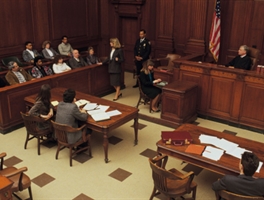
Consultation with James D. Madden, PE, a Professional Engineer, and Forensic Engineering Consulting and Testifying Expert Witness, is available to the client at all times during the work - before, during, and after the investigation, engineering analysis, reconstruction, report, and any other work on the case.
Consultation is available before starting a case. We invite you to consult with us. There is no charge for an initial phone consultation. Call us, or if you prefer we can schedule the consultation in advance.

Q ualifications of James D. Madden, P.E., Senior Forensic Engineer
The qualifications of James D. Madden, P.E., Senior Forensic Engineer, Consulting and Testifying Forensic Engineer and Accident Reconstruction Engineer , are listed on the Qualifications Page and the Specialties Work Page . <<< Click on the underlined text.
D ownloads and Links - Curriculum Vitae, Email and Bookmark
Download a Summary or Detailed Curriculum Vitae (CV) / Resume' for James D. Madden, P.E., email us, and bookmark this website.
Bookmark this site by typing Control D ('Ctr' + 'D').

C ontact information
For mailing address , phone , fax and email address click a button below the Fee Schedule section.
F ee Schedule
Contact us by phone, fax, mail or email for a copy of the Fee Schedule for charges for engineering and consulting services and testimony. Click a button below for contact information.

Contact us to discuss your case by phone at NO CHARGE . This consultation can be scheduled in advance to meet your schedule.
G eographic Area of Practice - North America
Over the last 30 years we have regularly worked on accidents which occurred in Ohio, Pennsylvania, Michigan, New York and nearby , including inspections of accident sites, equipment, and facilities, with reports and testimony. During these 30 years we have also worked on accidents which occurred in other states , and equipment and facilities located in other states, with inspections of accident sites, equipment, and facilities, from Utah and Kansas to Vermont and North Carolina, with reports and testimony for these accidents, when applicable.

Madden Accident Analysis & Forensic Engineering
Madden Accident Analysis & Forensic Engineering 1700 West Market Street, Suite 318, Akron, Ohio 44313, or 8803 Brecksville Road, Suite 7-216, Cleveland, Ohio 44141 phone: 440-838-1191 or 440-832-9540, fax: 440-838-1192 email address: [email protected]

MAAFE MAAFE

Copyright 2011, 2012, 2015, 2016, 2018, 2019 by Madden Accident Analysis & Forensic Engineering and James D. Madden, P.E., aka James Madden and Jim Madden . All rights reserved. This website contains photographs which are licensed with restrictions that prohibit downloading, reproduction, re-publication or re-transmission. Madden Accident Analysis & Forensic Engineering, through its Senior Forensic Engineer, James D. Madden, P.E., a licensed professional engineer, has performed Accident Investigations, Engineering Analyses and Accident Reconstructions routinely for accidents, incidents and cases located in Ohio, Pennsylvania, Michigan, and New York , in the technical areas which are noted in this website, as well as providing expert reports and testifying in court proceedings in these states in the capacity of an Expert Witness , including depositions, arbitrations and/or trials, with Forensic Engineering work also performed in, and/or for cases in, Illinois, Maryland, North Carolina, Vermont, Kansas and Utah, with testimony in court in Kansas. Madden Accident Analysis & Forensic Engineering, through its Senior Forensic Engineer, James D. Madden, P.E., a licensed professional engineer, has performed Accident Investigations, Engineering Analyses and Accident Reconstructions for accidents, incidents and cases in the metropolitan areas of Cleveland, Akron, Canton, Toledo, Warren, Youngstown, Mansfield, Columbus, Dayton, Cincinnati, Lima, Findlay, Marietta and Steubenville, as well elsewhere throughout Ohio, and the metropolitan areas of Pittsburgh and Erie, as well as elsewhere throughout western and central Pennsylvania, and the metropolitan areas of Detroit, Ann Arbor, Lansing, Flint and Port Huron, as well as elsewhere in southern Michigan, and the metropolitan areas of Buffalo and Syracuse, as well as elsewhere in western and central New York state. In many of these areas James D. Madden, P.E. has provided expert reports and testified in the capacity of an Expert Witness in court proceedings, including depositions, arbitrations and/or trials . Madden Accident Analysis & Forensic Engineering, through its Senior Forensic Engineer James D. Madden, P.E., is available for Accident Investigations, Engineering Analyses, Accident Reconstructions, and testimony in deposition, arbitration and trial, for cases located throughout North America.


